Visit smaller towns, local providers, castles, museum and ethnological collections, and choose certified Naše najboljše (Our Finest) experiences and products.
Discover Styria through local stories, castles, farming heritage, handicrafts, certified products and places where rich traditions live on.
The best way to get to know Styria is through its places, people and skills passed down through generations. Castles and old farmsteads reveal the region’s history, while local producers and craftspeople show how tradition lives on today. Choose a few visits connected by a common theme instead of a long list of stops, and take time to talk to local residents.
Naše najboljše (Our Finest): a mark of local origin and quality
Naše najboljše (Our Finest) is a collective brand identifying quality local produce, food products, handicrafts, culinary offerings and experiences. It connects providers from Maribor, Dravska dolina (Drava valley) and Dravsko polje (Drava plain), Pohorje and Kozjak, and Slovenske gorice.
The certificate helps visitors recognise offerings rooted in the local environment, its raw materials, skills and traditions. Products and services bearing the Naše najboljše (Our Finest) label are assessed against criteria for quality, authenticity and local origin. Find current offerings and certificate holders on the Visit Maribor website, and contact individual providers to buy or book.
How to include local quality in your trip
You can buy a certified product as a practical souvenir, while visiting its producer turns shopping into an experience. At a producer’s premises, discover where the ingredients come from; at a craft workshop, learn about the making process; at an inn, see how local ingredients are incorporated into dishes. Some providers welcome visitors only by arrangement because their main activity is growing or making products.
Before visiting, check the time, duration, price and language of the presentation. If travelling with children or a larger group, mention this when booking. Your host can then plan a suitable visit, and you avoid arriving when farm or workshop duties make a tour impossible.
Grad Rače (Rače castle) as the town’s cultural centre
Grad Rače (Rače castle) is a prominent historic building south of Maribor and today serves as the municipality’s cultural and social centre. Its architecture, courtyard and surroundings offer a connection to local heritage, while access to individual rooms may depend on events, exhibitions or official opening hours.
Combine your castle visit with a walk in Krajinski park Rački ribniki–Požeg (Rački ribniki–Požeg landscape park) or a visit to a local provider on Dravsko polje (Drava plain). Before arriving, check which areas are accessible and whether a guided tour is available.
Grad Hrastovec (Hrastovec castle): a striking landmark of Slovenske gorice
Grad Hrastovec (Hrastovec castle) stands on a hill above the Pesnica river valley and is among Slovenia’s largest surviving castle complexes. Its history spans centuries of aristocratic life, with the Herberstein family among its best-known former owners. The castle’s exterior alone is an important part of the cultural landscape of Slovenske gorice.
The castle is not normally open for tourist visits, having been associated with a social care institution for many years. Include it as an outdoor historical stop and check for current events or organised tours before visiting. Follow marked access routes and respect the privacy of people using the site.
Jareninski dvor (Jarenina manor): heritage and wine culture
Jareninski dvor (Jarenina manor) combines a historic setting, vineyards and a contemporary wine offering. A visit shows how built heritage can be connected to an activity that continues to shape life in Slovenske gorice. Tour and tasting programmes may vary, so arrange your visit in advance.
If you include a tasting, plan safe transport. Organised transport from Maribor makes sense for groups; individuals can choose a designated driver or another option that avoids driving after the tasting.
Ladejenkovo and pajštva in Lovrenc na Pohorju
Lovrenc na Pohorju preserves several important examples of rural and ethnological heritage. Ladejenkovo is considered the town’s oldest surviving farmstead. Its house and outbuilding illustrate construction methods and the organisation of life in the Pohorje countryside.
Another local feature is pajštva, a traditional drying house for fruit and flax. Its design explains how people stored and processed crops before modern equipment. As access to the interior or a presentation may require advance arrangements, check visit options with the local tourism organisation before your trip.
Handicrafts as living heritage
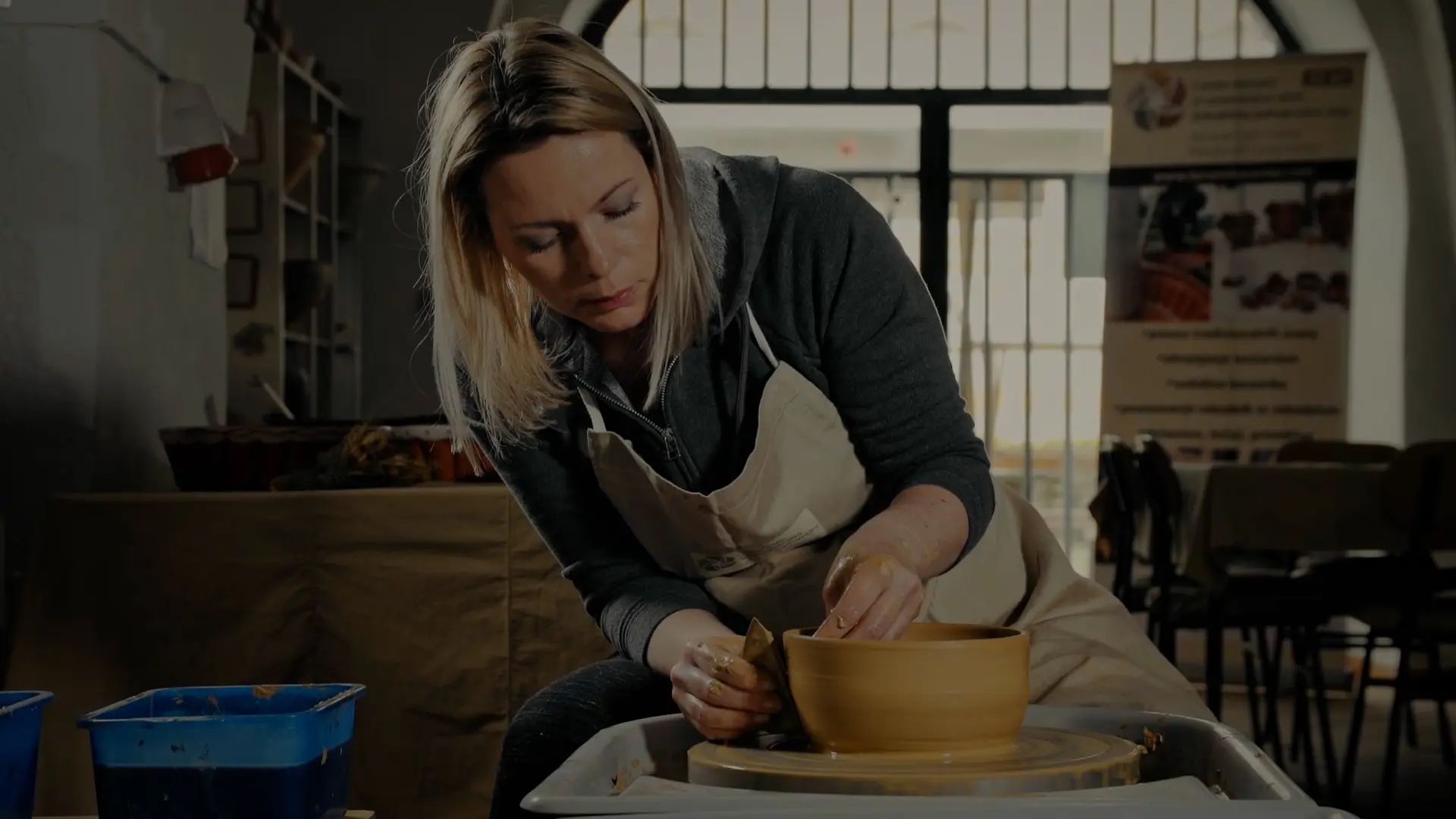
Handicrafts are more than decorative souvenirs. They tell stories of materials available in the area, former occupations and skills in working wood, clay, textiles, metal and other natural materials. Contemporary makers often adapt traditional techniques to modern uses while retaining their connection to the local environment.
When visiting a workshop, ask whether you can watch the making process or take part in a workshop. Handwork takes time, so made-to-order products may not be available immediately. Buying directly from makers supports the preservation of skills and the local economy.
Countryside flavours and visits to producers
Farms, oil mills, beekeepers, fruit growers, winemakers and other producers bring the relationship between landscape and food to life. A visit may include a tasting, an explanation of production or buying products, but offerings vary throughout the year. Seasonality is part of the experience: grape harvests, fruit picking and processing create a different rhythm from the winter months.
On a working farm, follow your host’s instructions, do not enter work areas without permission and supervise children. Tell your host about allergies or dietary restrictions before a tasting.
Three ideas for an authentic trip
The heritage of Dravsko polje (Drava plain): Grad Rače (Rače castle), a short walk nearby and a visit to a certified local provider.
Stories of Slovenske gorice: an exterior visit to Grad Hrastovec (Hrastovec castle), Jareninski dvor (Jarenina manor) and a tasting or craftsperson visit arranged in advance.
The Pohorje countryside: Lovrenc na Pohorju, Ladejenkovo, pajštva and a stop at a local producer or dining venue.
Allow plenty of time for your visit
For a half-day trip, choose one area and no more than two main stops. For a full day, combine a castle or farmstead, a provider visit and lunch. Before leaving, check opening hours, accessibility, reservations and payment methods. Rural roads can be narrow and public transport less frequent, so plan your route and safe return in advance.
The most authentic experiences often take place in small groups and by arrangement. Respect for local residents, private land and providers’ work schedules is as important as choosing sights. Your visit becomes more than a look at the past: it is a meeting with people preserving and developing local heritage today.
Frequently asked questions
The wider area includes Grad Rače (Rače castle), Grad Hrastovec (Hrastovec castle), Jareninski dvor (Jarenina manor) and other historic buildings.
It is a quality certificate identifying local products, produce, experiences, accommodation and dining with a clear connection to the destination.
Yes. Many of the region’s towns and providers are close enough for a half-day or full-day trip.
Explore castles, natural sights, museums, local food, handicrafts, farming heritage and certified experiences.
Local