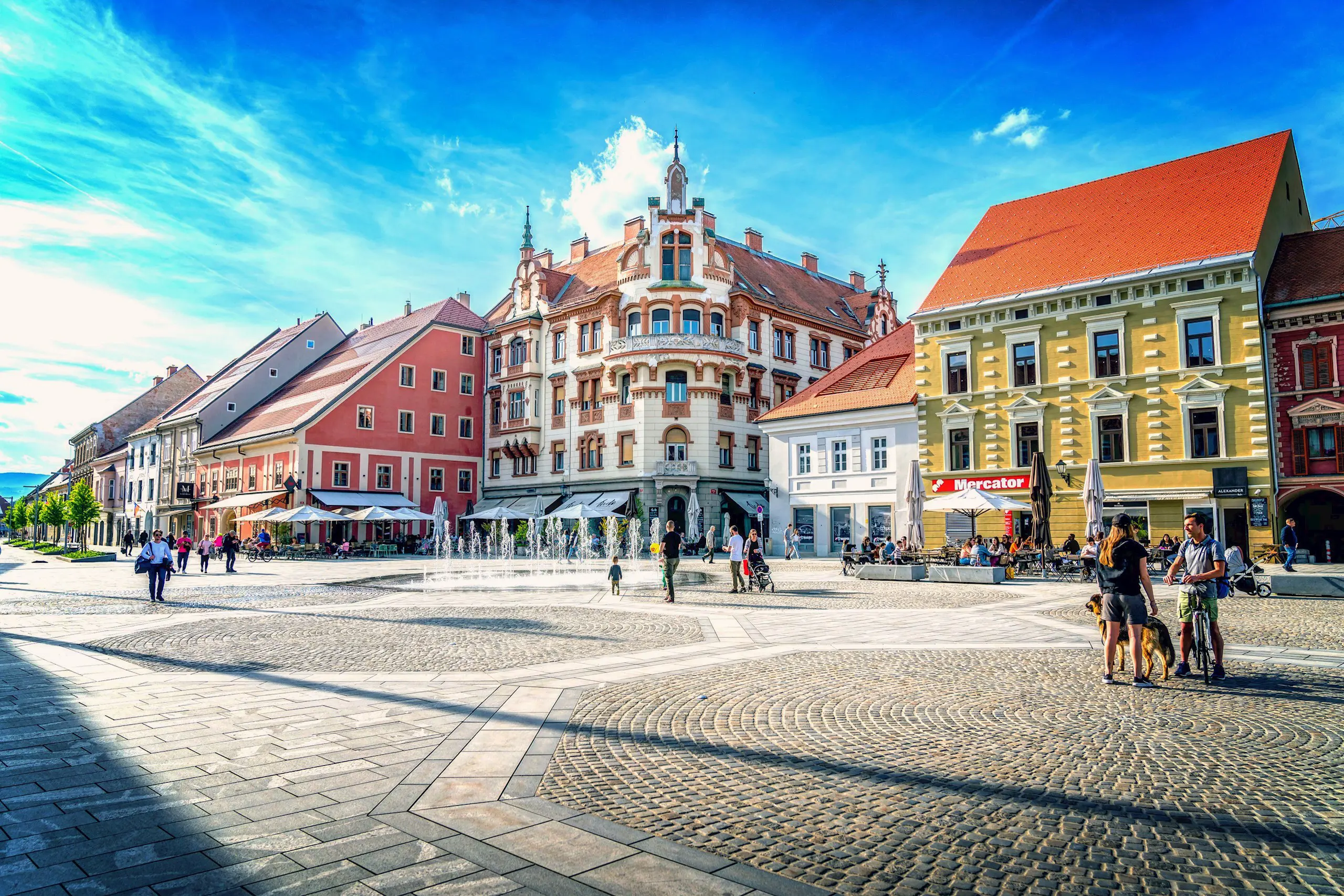
What do the world’s oldest grapevine, inventor Nikola Tesla, an Olympic champion and a Michelin star have in common? All these stories lead to Maribor! Slovenia’s second-largest city is much more than a city on the Drava. Here you can admire a grapevine that has survived wars and fires, travel from city streets to ski slopes in just a few minutes and explore the stories of people who changed the world. Discover eight surprising facts about Maribor that will show you the city in a completely new light.
A city of world records, remarkable stories and unexpected discoveries
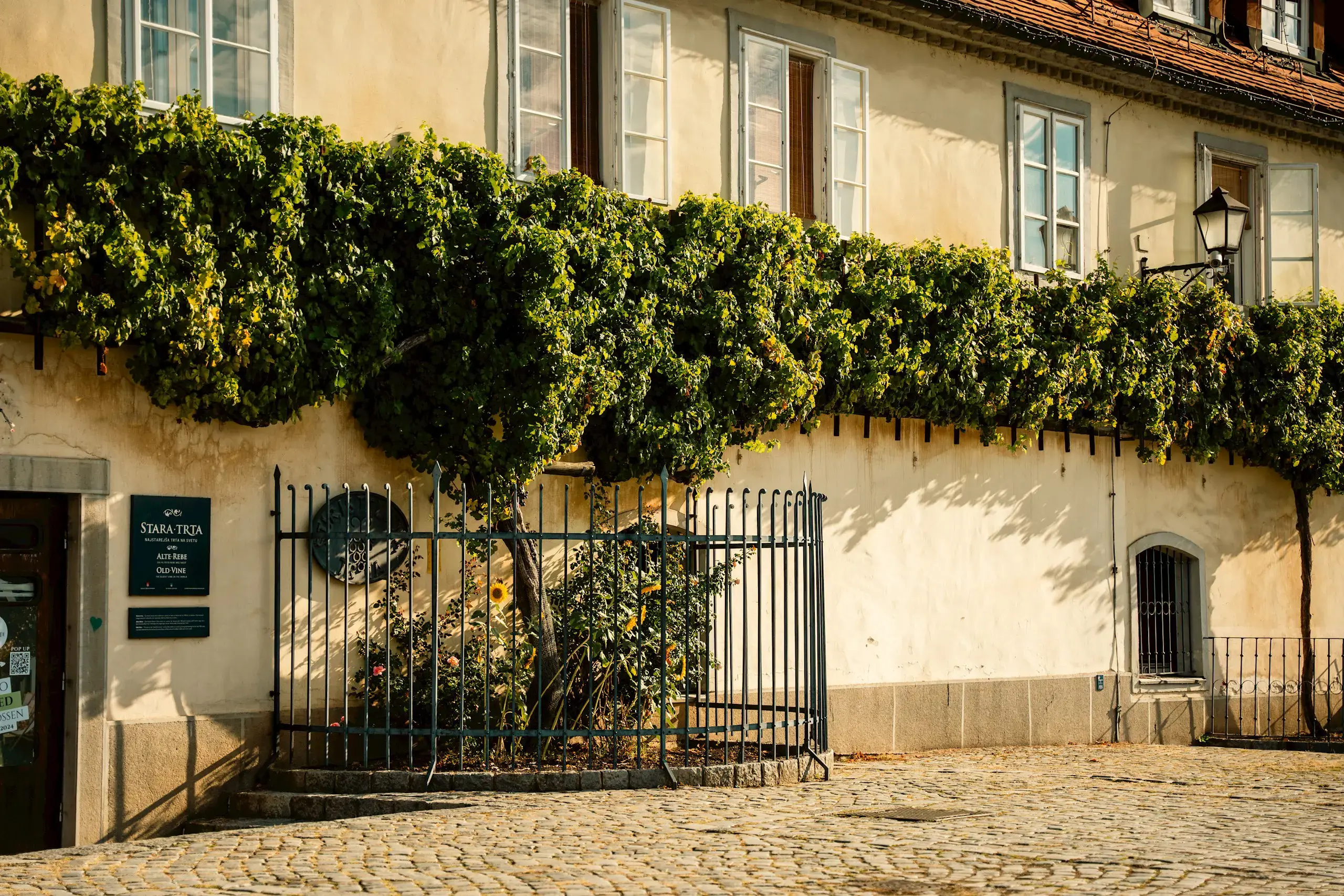
Imagine being 450 years old and still bearing fruit every year. That is exactly what Najstarejša trta (World’s oldest grapevine) does. It grows in Maribor’s Lent district and has been listed in Guinness World Records since 2004.
Yet its age is far from the most incredible part of the story. It has survived Ottoman sieges, medieval fires, the vine pest phylloxera that devastated Europe’s vineyards, and even the bombing of Maribor during the Second World War. What nearly killed it, however, was something entirely unexpected: a rise in the Drava’s water level following the construction of a dam.
Today it thrives again, producing grapes of the žametovka, also known as modra kavčina, variety every year. Its harvest yields at most around 100 small bottles of wine, which the city presents as precious official gifts. Recipients have included Bill Clinton, the Dalai Lama and Arnold Schwarzenegger.
Visiting tip: Walk to Hiša Najstarejše trte (House of the World’s oldest grapevine) in Lent, where you can discover its story and taste outstanding Styrian wines.
Maribor has more capital titles than you might expect
Maribor may not be Slovenia’s capital, but judging by the number of capital titles it holds, it almost deserves to be!
In 2012 it became European Capital of Culture, followed by European Youth Capital a year later. In 2018 it gained two titles: European City of Sport and European Capital of Social Economy.
The story certainly does not end there. In 2025, the tourism platform European Best Destinations named it Europe’s best green capital, and in 2026 Europe’s best wine capital. In the latter selection, Maribor even ranked ahead of the world-famous wine destinations of Bordeaux and Porto!
Its lively festival scene shows that these titles are more than words on paper. Festival Lent, Festival Maribor, Borštnikovo srečanje (Maribor theatre festival) and Poletni lutkovni pristan (Summer puppet pier) demonstrate every year that Maribor’s cultural significance far exceeds what its population might suggest.

A city where football is almost a religion and Olympic medals are part of its history
To understand Maribor, you should experience the atmosphere of a football match at Ljudski vrt at least once.
With 16 Slovenian national championship titles, NK Maribor is Slovenia’s most successful football club. It has reached the group stage of the elite Champions League three times, creating unforgettable evenings when almost the entire city cheered it on.
Maribor also has a rich Olympic history. The legendary gymnast Leon Štukelj, who won six Olympic medals, including three golds, is closely associated with the city. He lived to almost 100 and became one of the greatest figures in Slovenian sport.
Zlata lisica (Golden Fox) also holds a special place in the city’s sporting memory. This legendary competition for the world’s best female Alpine skiers began in 1964 and drew crowds of supporters to Pohorje’s snowy slopes for decades. Snow conditions later prompted its move to Kranjska Gora, and the last edition under this name took place in 2024.

Maribor was named after a castle that has almost disappeared
Maribor’s history stretches far beyond the Middle Ages, as the area was inhabited in prehistoric times. The first known written mention of its name dates to October 20, 1164.
Interestingly, this was a reference to the castle Marchburch, which stood on what is now Piramida, rather than to the town.
The fortress was built to oversee an important route through the Drava valley. A settlement gradually developed below it and was first mentioned as a town in 1254.
Why is the hill called Piramida today? After the old castle was demolished, a stone pyramid was built from its remains. Lightning struck it in 1820, and a chapel was later built on the site. It still stands today.
Tip: Climb Piramida, where the remains of the former castle are accompanied by one of the finest views of Maribor, the Drava and Pohorje.
Nikola Tesla lived in Maribor, then was expelled from the city
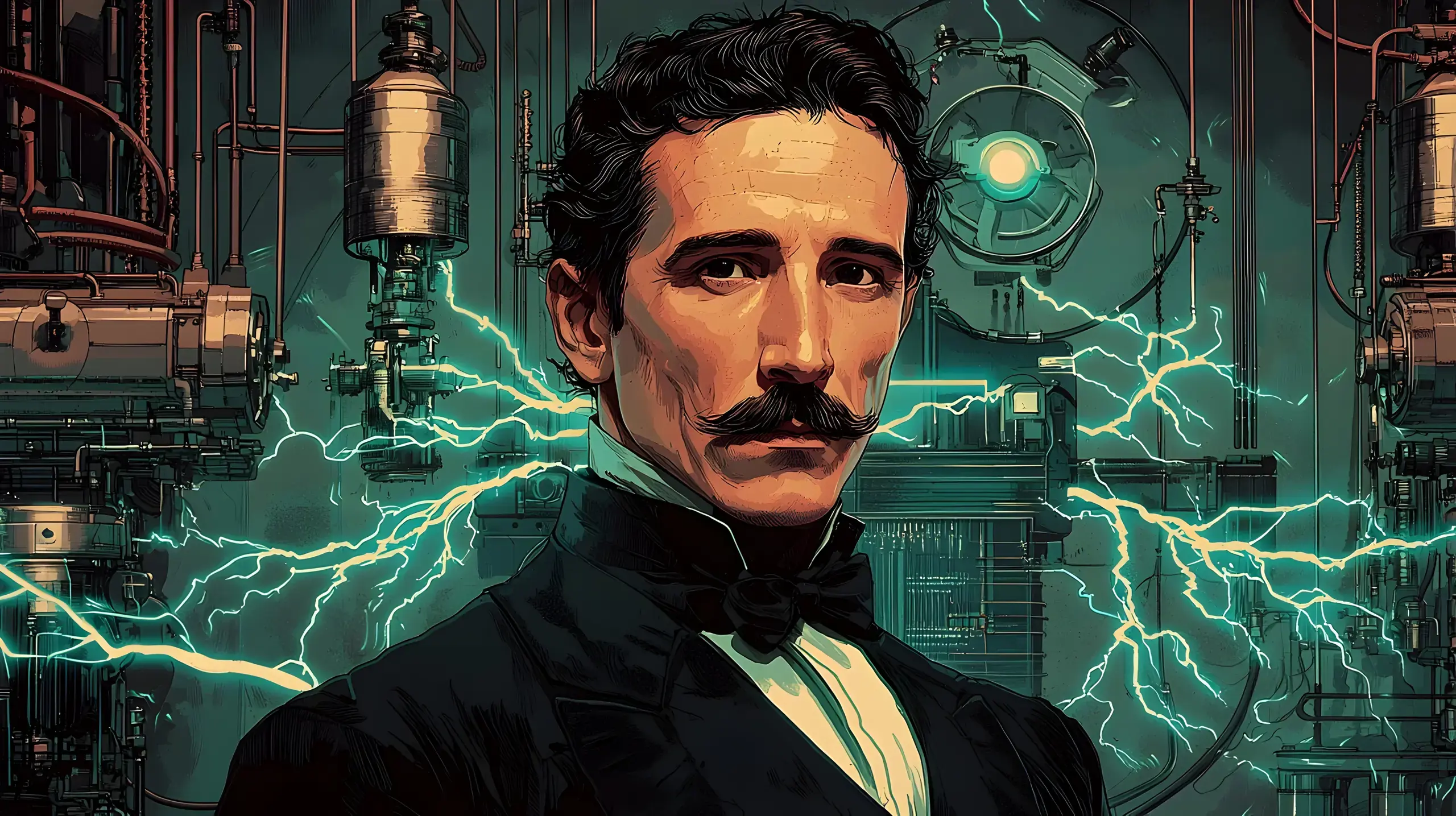
Before Nikola Tesla became a world-famous inventor, he was a young man who had abandoned his studies, played billiards and cards, and was trying to find his way.
He arrived in Maribor in late 1878 and found work as a technical draughtsman in the Druško workshop. He liked to spend his free time at the Pri veselem kmetu inn on the corner of today’s Mlinska and Partizanska cesta.
His Maribor story ended rather unusually. On March 8, 1879, the city gendarmerie arrested him. As he did not have a valid residence permit, the authorities expelled him to Gospić.
Can you imagine? The city that now proudly remembers Tesla’s stay once sent the future great inventor beyond its borders.
Tesla is far from the only famous figure associated with Maribor. General Rudolf Maister, composer Hugo Wolf, space visionary Herman Potočnik Noordung, Bishop Anton Martin Slomšek and many others also left their mark here.
More than two kilometres of wine tunnels lie hidden beneath the city
Maribor has a rich wine tradition that you can explore beyond its vineyards. Some of its greatest treasures lie deep beneath the city streets.
Beneath Trg svobode (Freedom square) lies Vinagova klet (Vinag wine cellar), one of Europe’s largest and oldest classical wine cellars. It covers 15,000 square metres and has 2.1 kilometres of underground tunnels.
The oldest part dates to 1847. As you walk through it, you can admire enormous wine barrels, historic bottles and a rich wine archive.
Food lovers will also enjoy the culinary scene in Maribor and its surroundings. In nearby Zgornja Kungota, chef Gregor Vračko has earned a Michelin star with Hiša Denk. His cooking combines Styrian ingredients, bold creativity and contemporary cuisine.
From traditional Styrian dishes to fine dining, good food is an essential part of the experience in Maribor and its surroundings.

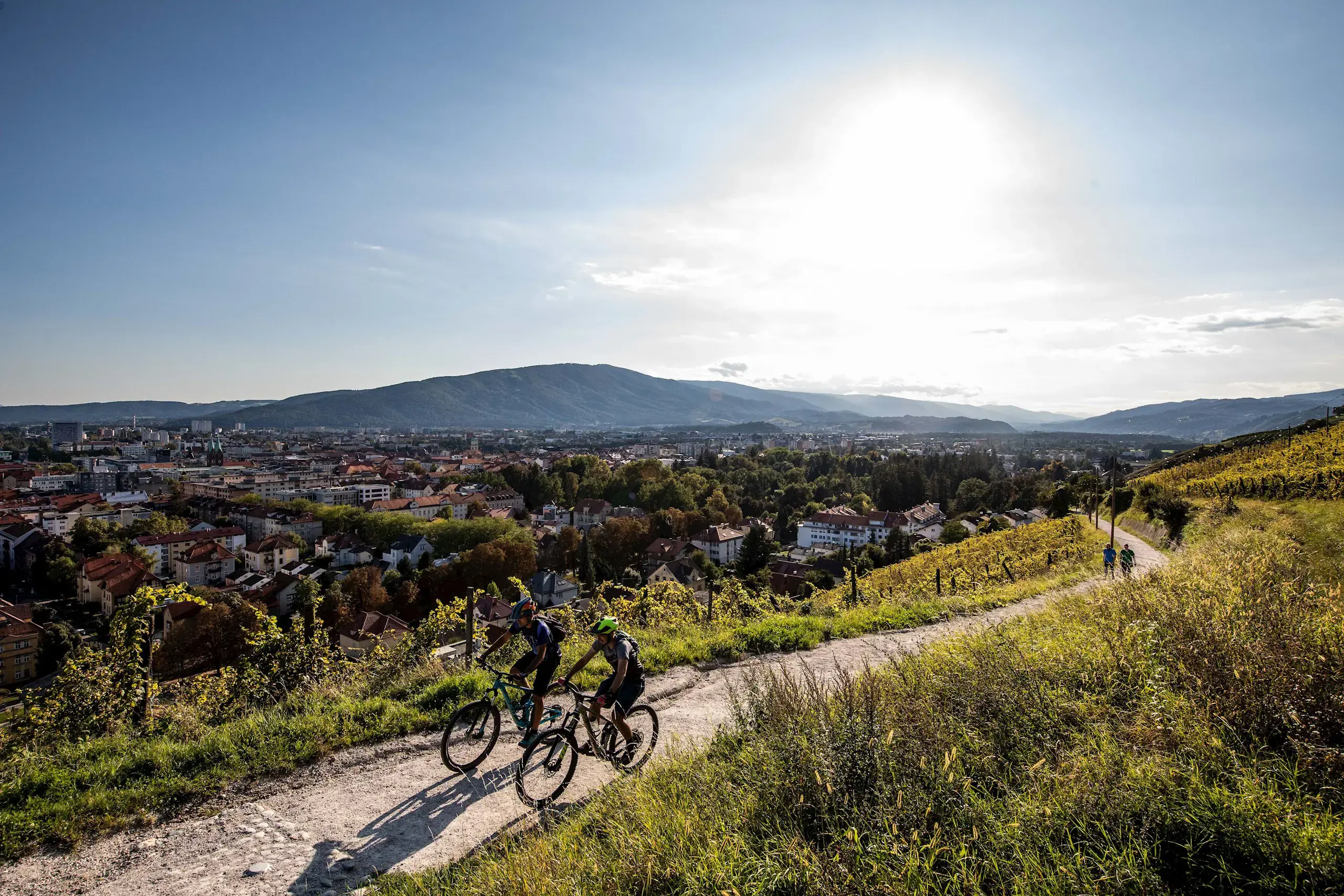
In Maribor, vineyards begin almost in the city centre
Few cities can boast such an interesting combination of urban life and nature.
In Maribor, you can stroll along the Drava in the morning, explore the historic centre before lunch, and be walking among vineyards or through Pohorje’s forests by the afternoon.
A famous staircase with 455 steps leads to Kalvarija (Calvary), one of Maribor’s most recognisable hills. At the top, a view awaits of the city surrounded by vineyards, forests and Pohorje.
Another special place is Mestni park Maribor (Maribor city park), with its three ponds, old trees and walking paths, where you can completely forget that you are in Slovenia’s second-largest city.
This blend of city life, nature and wine-growing tradition gives Maribor its distinctive character.
