For a first visit, we suggest Grajski trg and the castle exterior, Slomškov trg, Glavni trg, Židovski trg and Lent with the Old Vine. The route combines city sights with time for coffee and a walk beside the Drava.
Explore Maribor in three hours: city squares, Lent and the Old Vine on a relaxed riverside walk.
Only three hours in Maribor? Walk from Grajski trg past the cathedral and Glavni trg to Lent and the world’s oldest vine. Discover the castle where Franz Liszt performed, traces of a former cemetery and the story of the Plague Column. This suggested walk leaves time for coffee, views of the Drava and a stop by a vine that still bears grapes.
Three hours for a lasting first impression
Even a short visit offers a first taste of Maribor. City squares, historic buildings and the banks of the Drava form a walk with an ever-changing view of the city: from a castle among the streets to the cathedral, lively café terraces and a vine growing against a riverside house.
The suggested route leads from Grajski trg through Slomškov trg and Glavni trg to Židovski trg, then down to Lent and the Old Vine. Spread it over three hours, leaving time to look around and take a break.
The timings below are a rough guide for a self-guided walk, viewing sights from the outside. To include a longer museum visit, a guided experience or lunch, leave out one of the other stops.
The first 30 minutes: a castle you won’t find on a hill
Start on Grajski trg. Maribor Castle stands in the heart of the city, surrounded by Grajski trg, Trg svobode and Trg generala Maistra. Its original core was built in the late 15th century to strengthen the north-eastern section of the city walls. Later alterations transformed the defensive building into a more luxurious residence.
The castle also has a surprising musical story: Franz Liszt performed in its Knights’ Hall in 1847. As you look at the façade, imagine the audience listening here to one of the most celebrated pianists of the 19th century. Today, the castle houses the Maribor Regional Museum.
For a short visit, explore the castle exterior and the surrounding squares. If museum collections are a particular interest, make the museum the focus of your three hours and spend the remaining time on a shorter walk to the Drava.
The next 30 minutes: a square with history in its walls
Continue through the city streets to Slomškov trg. Alongside the cathedral, the square is framed by the university, theatre and post office buildings. In its green area, look for the small statue of Korlek beside the pool.
One of the square’s distinctive features lies along the cathedral’s outer wall. The city cemetery once surrounded the church; surviving gravestones set into the church wall still bear witness to this former use. The square you are walking through reveals another layer of city life.
Look at the space immediately around the church, too. Jože Plečnik designed the raised oval platform with stone bollards and columnar oaks in 1938. This short city walk offers a chance to discover his architectural legacy as well.
Next, coffee with a view of the city’s history
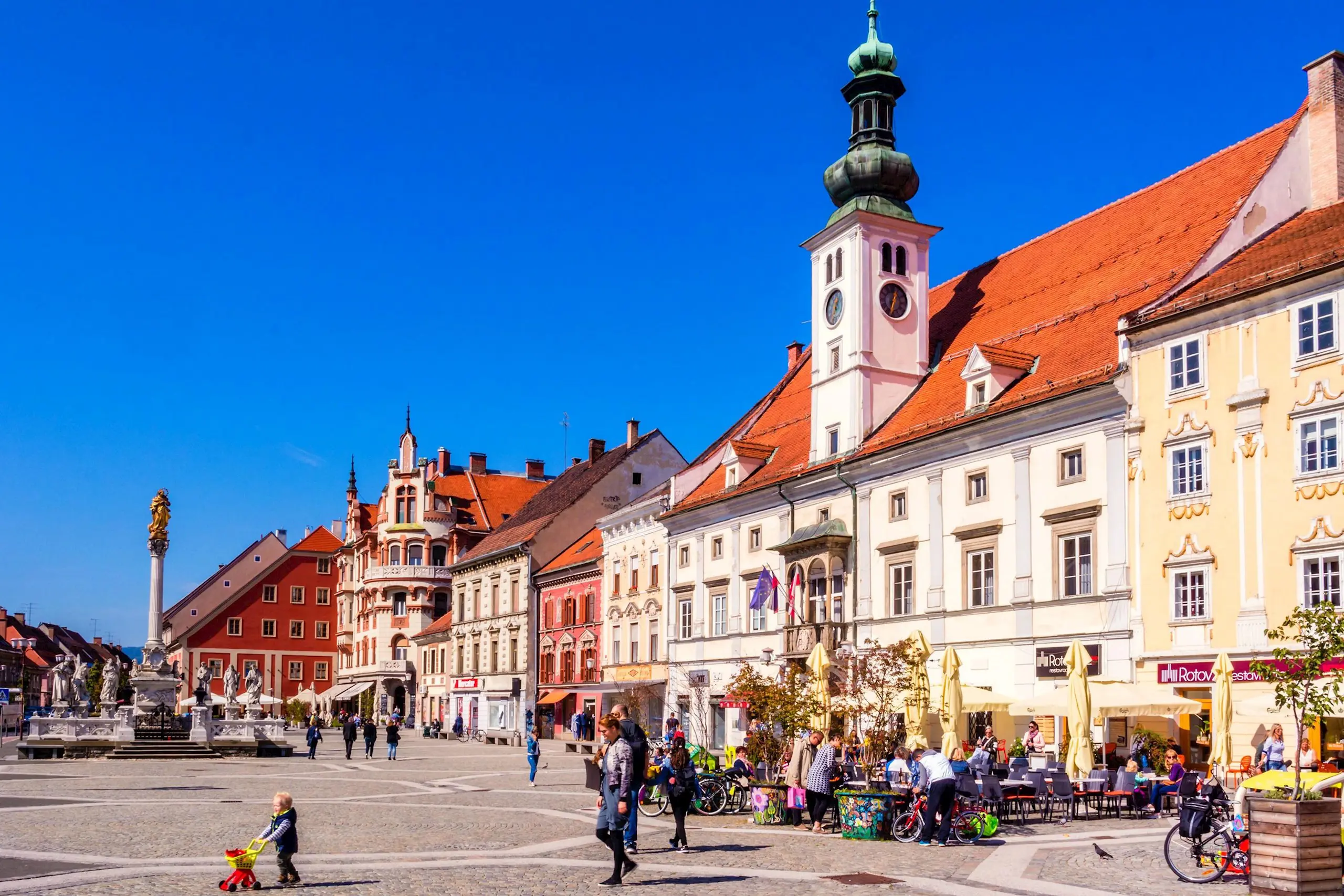
Follow Poštna ulica to Glavni trg. Take time to admire the façades, the Town Hall, also known as Rotovž, and the Plague Column. For centuries, this square was a marketplace where farmers and craftspeople sold their produce and goods. Today, you can take it all in from a café terrace.
The Plague Column has a story that rewards a closer look. The citizens erected the original column with a figure of Mary in 1681 to give thanks for the end of the plague. In the 18th century, it was replaced by a monument by sculptor Jožef Straub, with six saints surrounding the central figure of Mary.
Take your planned break here. Over coffee, watch historic architecture, everyday errands and city life come together in one place. Then continue towards Židovski trg.
The final hour: river views and a stop at the synagogue
Židovski trg connects the walk through the old town with the Drava. Beside it stands the former synagogue, now the Center of Jewish Cultural Heritage Synagogue Maribor. It opened as a cultural centre in 2001, with a mission that includes preserving and presenting Jewish heritage and encouraging intercultural dialogue.
For a short visit, stop beside the building and enjoy the view towards the Drava. If you would like to go inside, check the opening hours and current exhibition beforehand. Its story deserves time, so fit a longer visit around the rest of your walk.
Then head down towards Lent. The city now opens onto the river, which accompanies the final part of your visit.
To finish: meet Maribor’s oldest resident
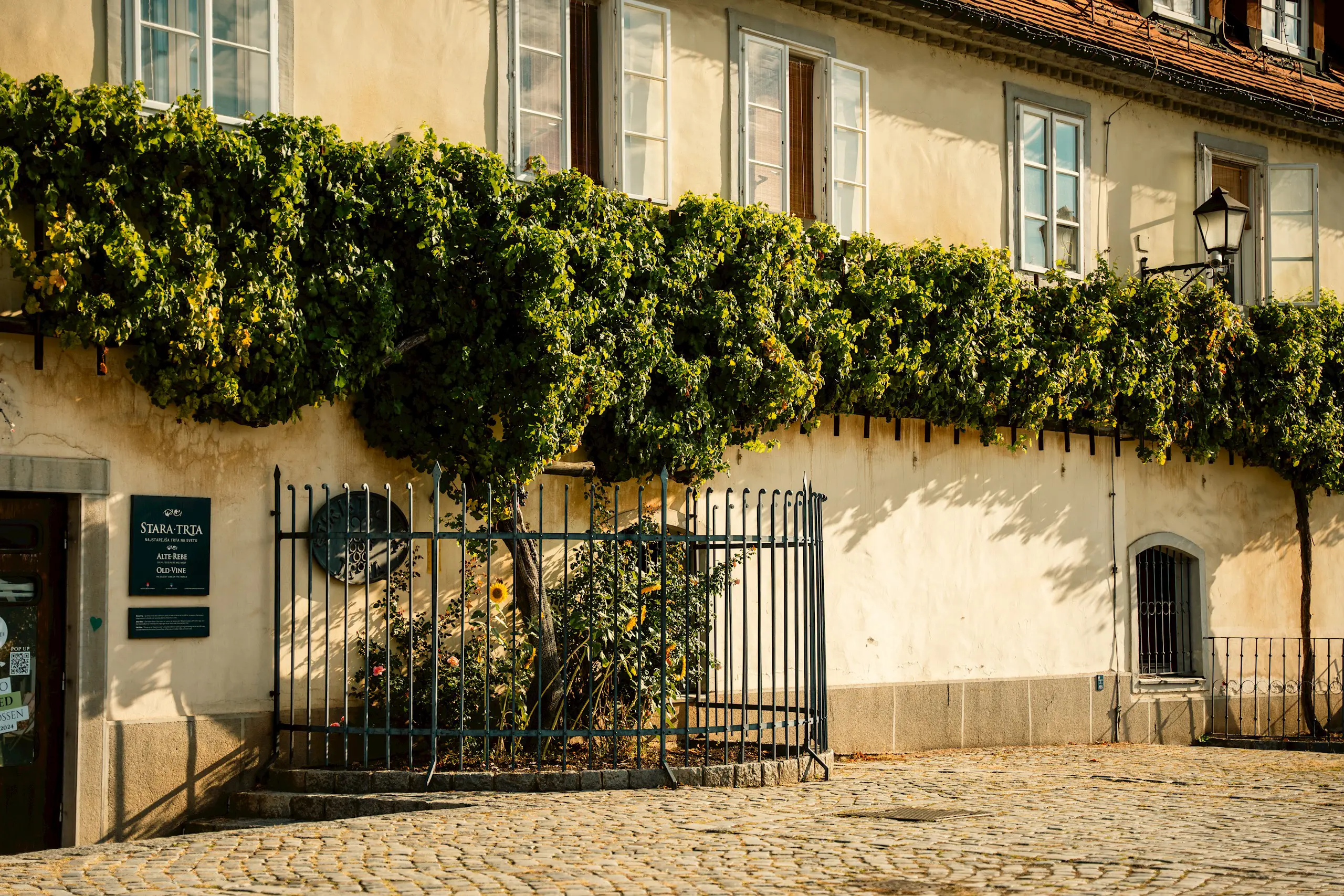
On Lent, look for Vojašniška ulica 8. A Žametovka, also known as Modra kavčina, vine more than 450 years old grows in front of the house. Guinness World Records recognises it as the world’s oldest vine still bearing grapes. What makes it special is that this landmark is alive: every year, its growing cycle continues towards another harvest.
The Old Vine survived fires, phylloxera and the bombing of the city, but one of its greatest challenges came later. When the Drava’s water level rose in the 1960s, the balance of its root system was disrupted. The vine began to decline, made worse by neglected surroundings and inadequate care. Experts led by Tone Zafošnik helped preserve it through restorative care.
So, as you stand beside it, think beyond its record-breaking age. Its story also reflects the knowledge and care of the people who made it possible for visitors to admire it today.
If time allows, step inside the Old Vine House to discover the city’s wine heritage. Its wine shop offers wines from Štajerska producers; the Old Vine’s own wine, produced in very small quantities, is reserved for prestigious diplomatic gifts.
Finish your visit with a short walk along the riverbank. After the city squares and their stories, enjoy a few more minutes beside the Drava.
Set your own pace
If history interests you most, spend more time at the castle, cathedral or synagogue. If you would rather soak up the city’s atmosphere, linger on Glavni trg and beside the river. With children, choose a few simple challenges: find Korlek, count the saints around the Plague Column and examine the Old Vine’s trunk.
Let these three hours be time to experience the city. Choose the stops that appeal to you and leave room for an unexpected pause.
Frequently asked questions
Yes. The route is designed as a walk through the old town and Lent. It includes a descent towards the river; if you need a step-free route, check for a suitable connection between Židovski trg and the riverbank.
The suggested timings are mainly based on viewing sights from the outside. For a longer museum or exhibition visit, shorten other stops. Check opening hours and ticket information before arriving.
On Lent, in front of the house at Vojašniška ulica 8. You can see the vine outdoors; check the current opening hours if you wish to visit the interior.
Because the harvest is limited, wine from the Old Vine itself is reserved for diplomatic gifts. At the Old Vine House, you can discover and taste other wines from local and Štajerska producers, depending on the current selection.
Spend more time in a museum or exhibition, with a shorter walk between the city squares and a café stop. Plan around opening hours and your interests.
At TIC Maribor, the tourist information centre at Partizanska cesta 6a. You can also ask about guided city tours.
Active
Local