This eight-hour group excursion connects the Karničnik tourist farm near Velenje, Perger 1757 Honey Paradise in Slovenj Gradec and the Vinag wine cellar in Maribor. The programme combines wood-fired dishes, honey confectionery, honeybread and candle-making heritage, and a cellar tour with wine tasting.
Working hours
Guided visits from 9 am to 5 pm or by arrangement. Advance arrangements and booking with the organiser are required.
Contact
Offer
From 42,00 € per person for groups of 20 or more. Prices for smaller groups are provided on enquiry. The price includes the listed guided tours, tastings, admission fees and VAT. Transport and drinks with the meal at the Karničnik tourist farm are not included.
A culinary excursion through three towns
Culinary Trio connects three stops: the Karničnik tourist farm near Velenje, Perger 1757 Honey Paradise in Slovenj Gradec and the Vinag wine cellar in Maribor. The group programme combines rural cuisine, family craft traditions and wine culture.
Karničnik tourist farm near Velenje
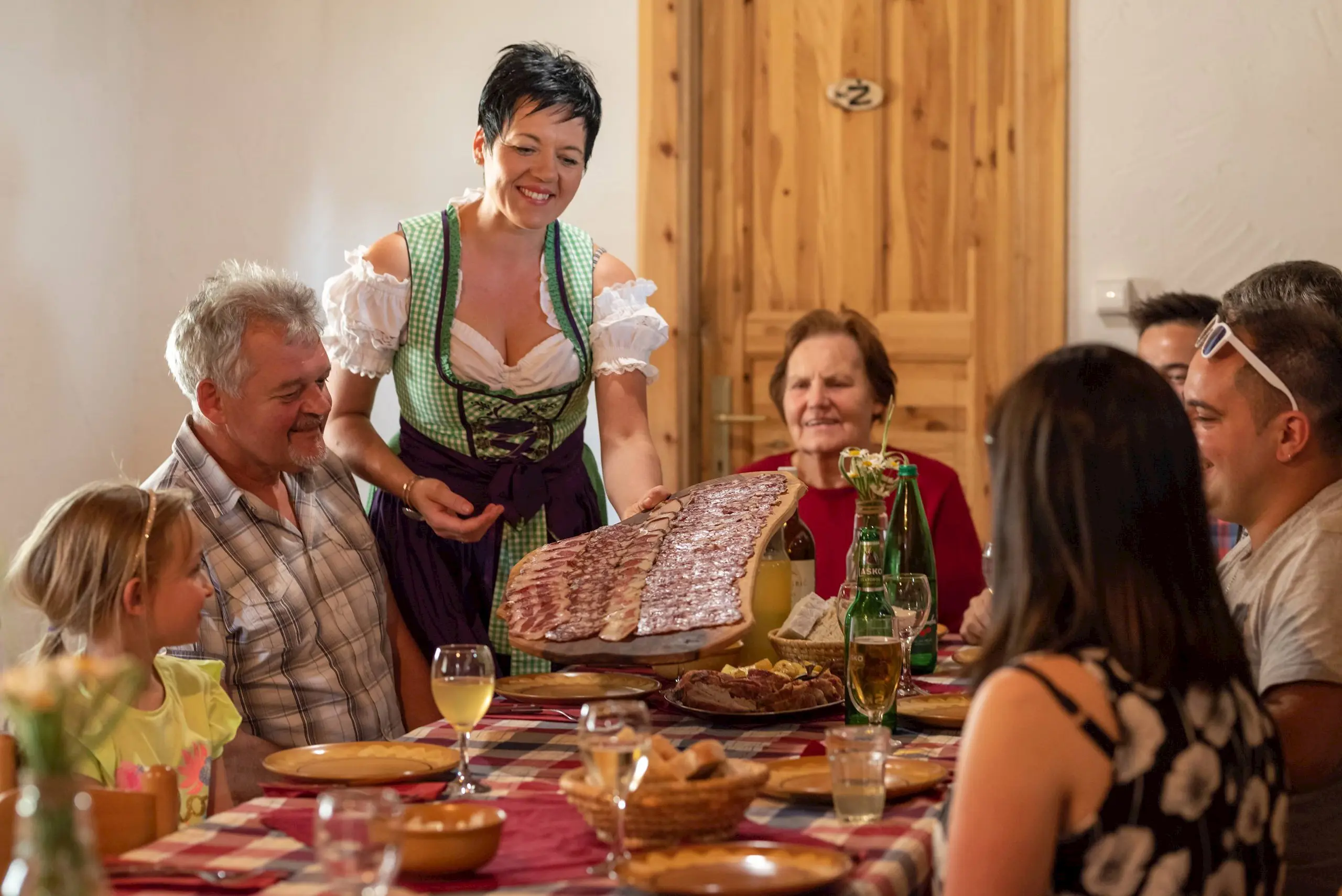
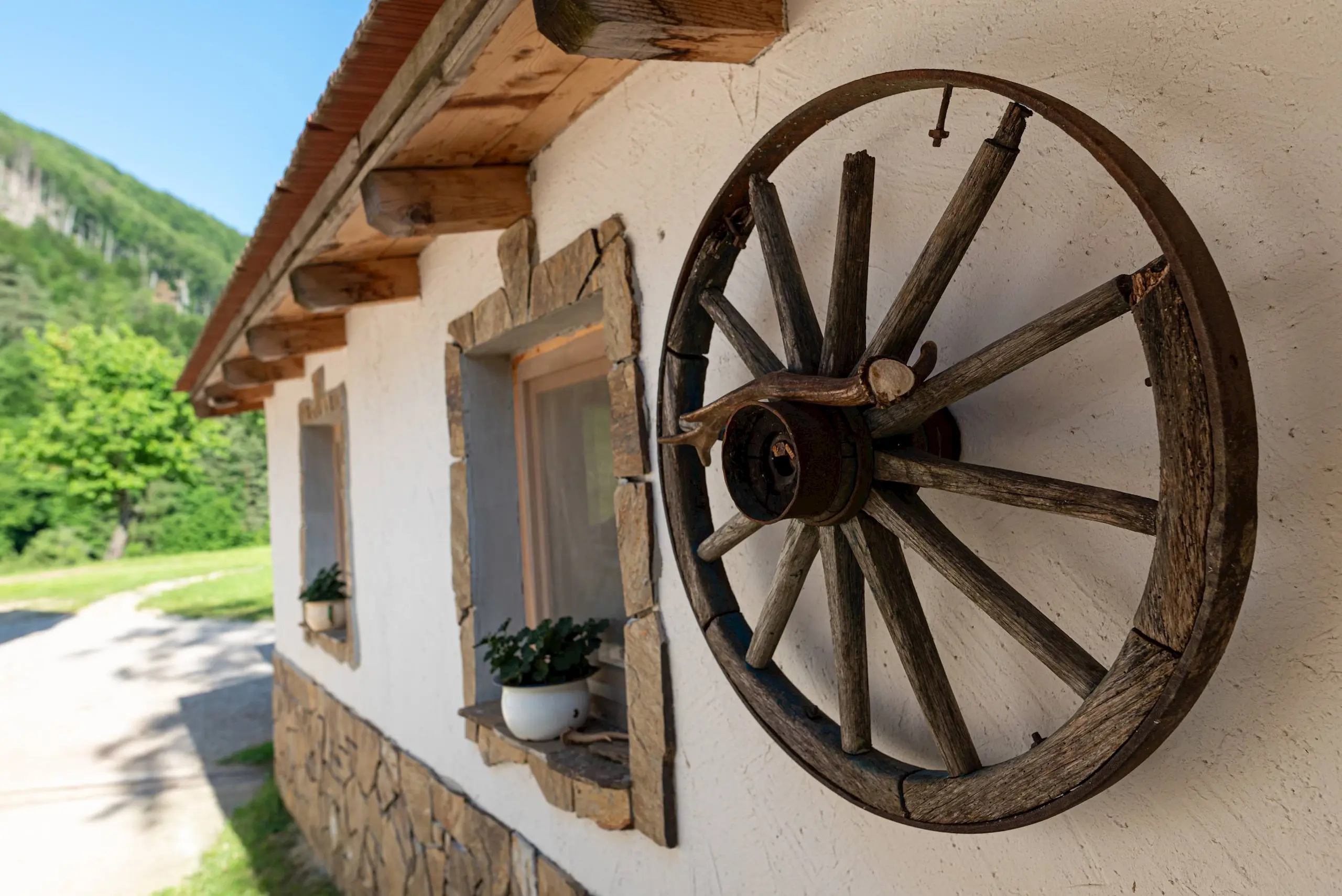
The Karničnik farm is located in Hrastovec, a few kilometres from Velenje. The farm raises horses and indigenous Krškopolje pigs, known for their marbled meat. Its food is prepared in a wood-fired oven and served in a former hop-drying building converted into a gathering space.
The farm also has a shop selling homemade dry-cured meats that reflect the flavours of the Šaleška Valley countryside.
Perger 1757 Honey Paradise in Slovenj Gradec
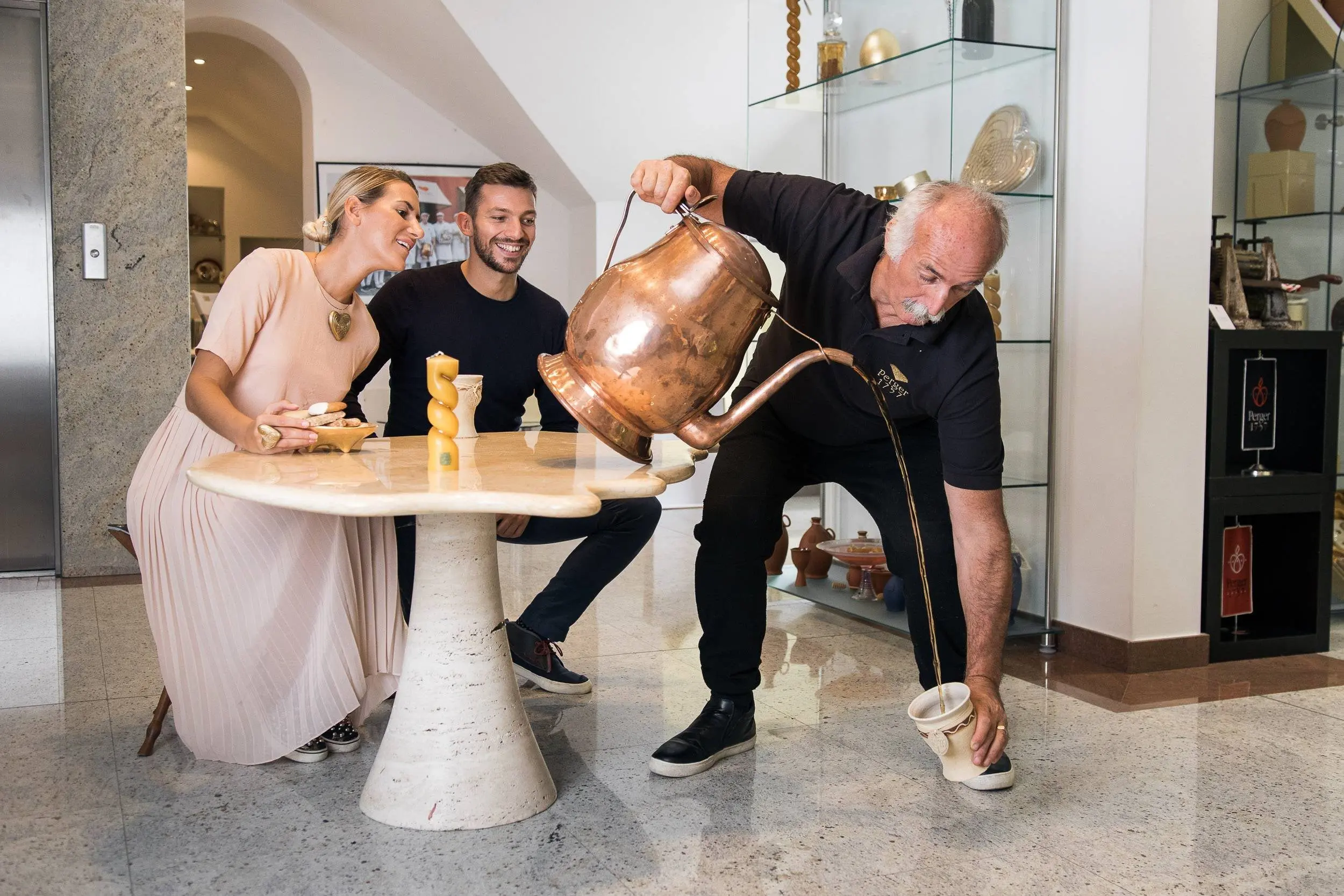
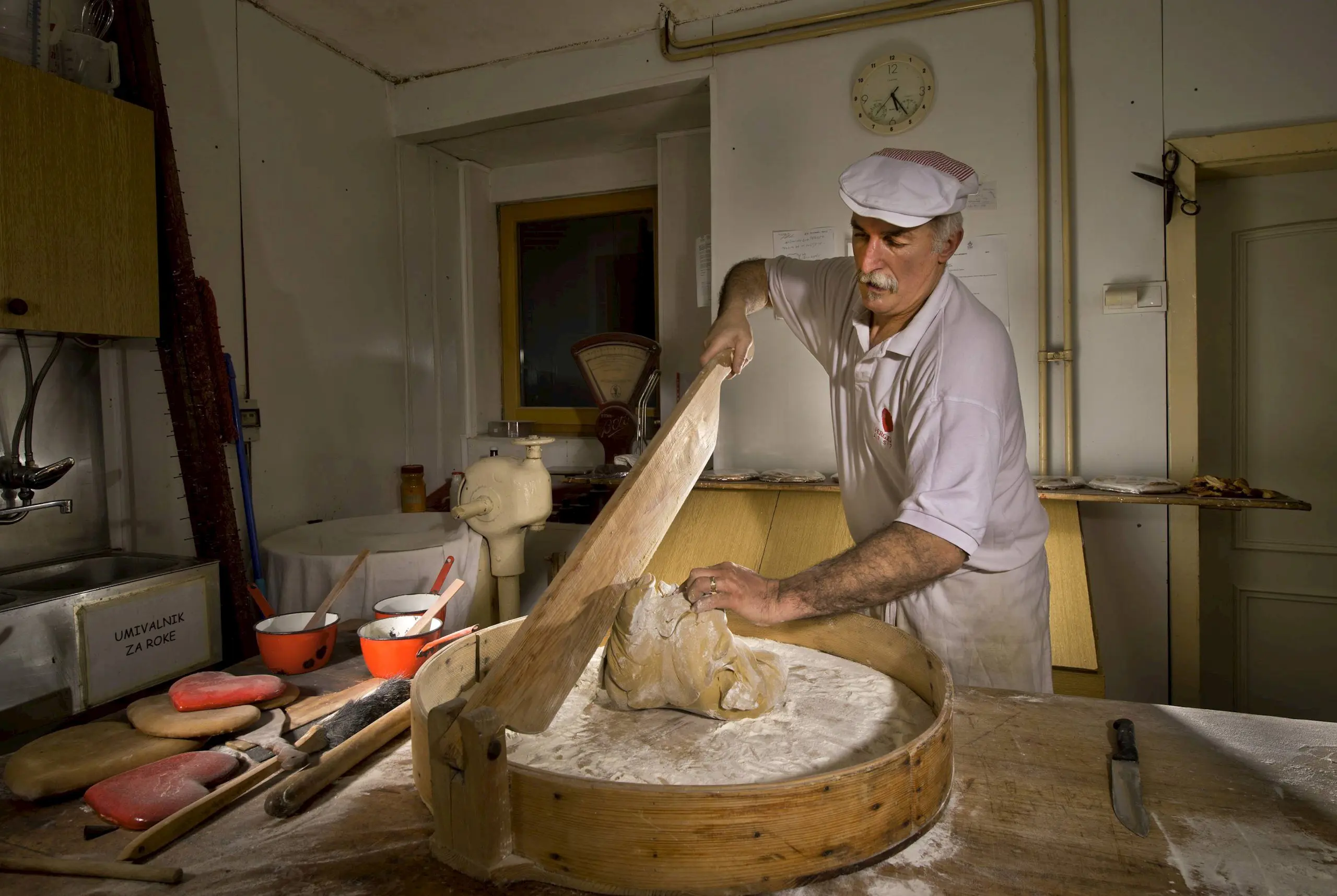
The Perger family in Slovenj Gradec has preserved the traditions of honey confectionery, decorated honeybread and candle making since 1757. These crafts have been passed down through nine generations. The visit introduces the family’s history, honeybread hearts, honey delicacies and candle making. The programme includes a guided visit and tasting.
Vinag wine cellar tour and tasting in Maribor
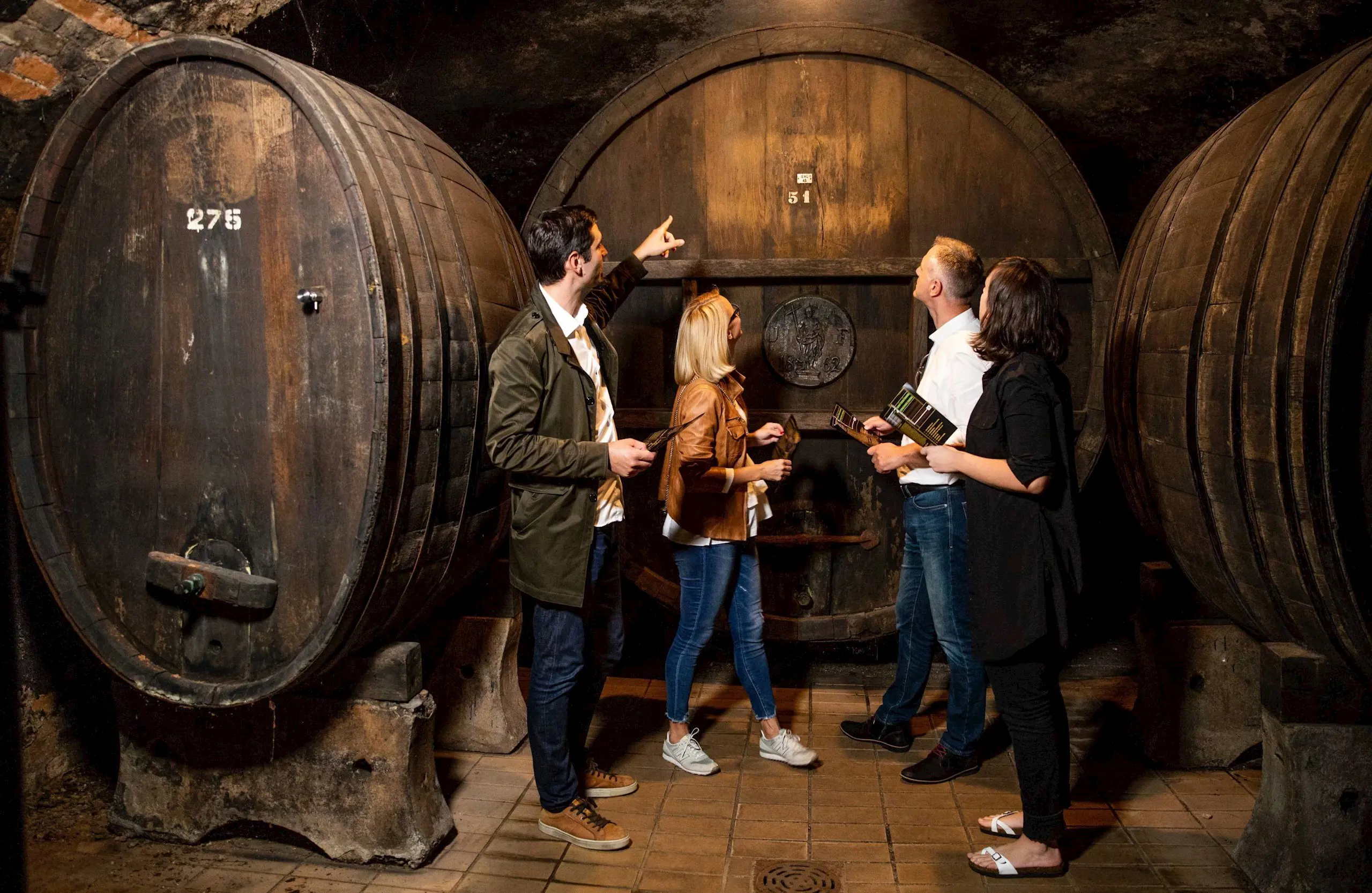
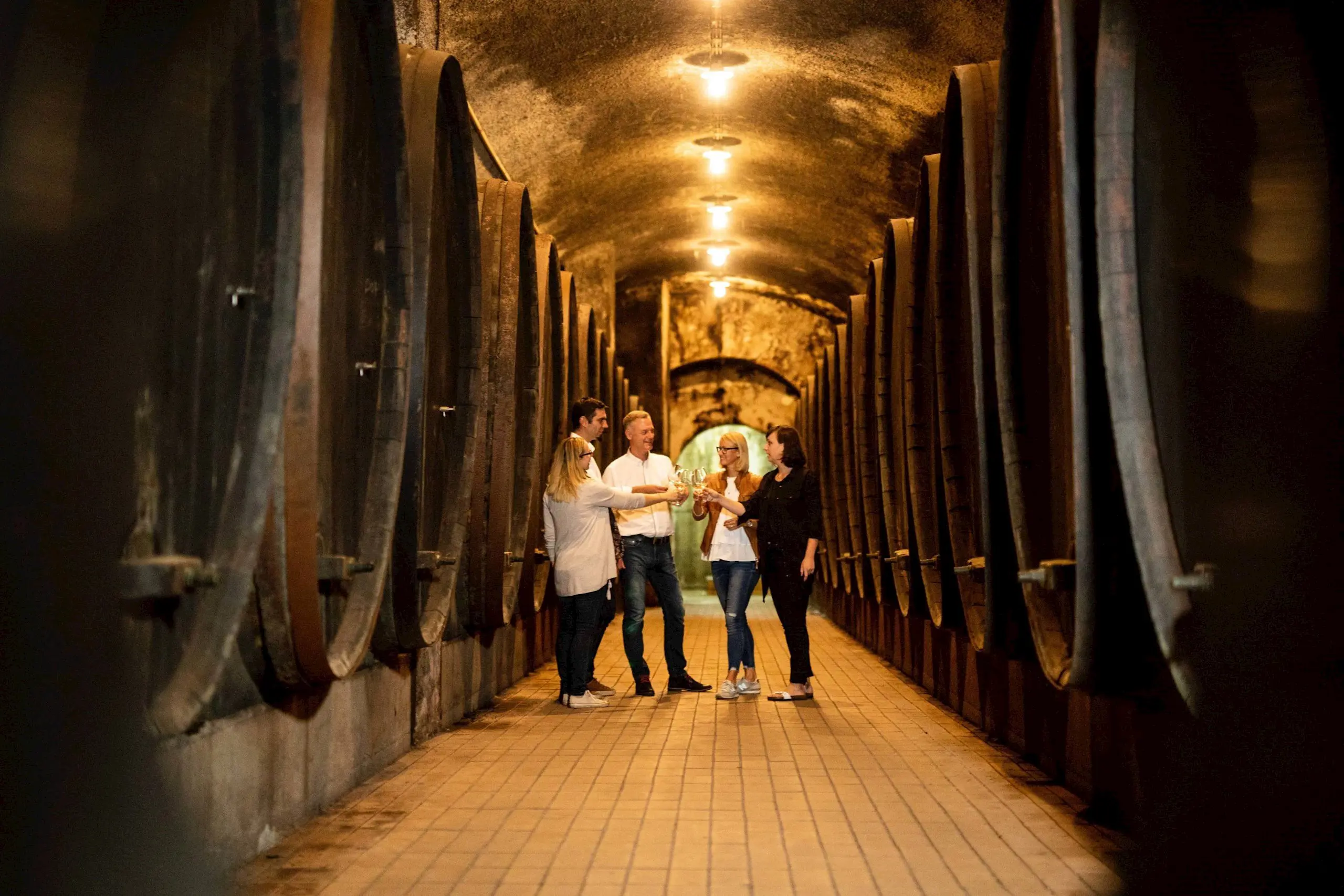
The history of the Vinag wine cellar dates back to 1847, when Alojz von Kriehuber, the lord of Melje Manor, developed winegrowing and built a wine cellar. Beneath central Maribor, the cellar covers 15,000 m² and has 2.1 kilometres of underground tunnels.
Wooden barrels, concrete tanks and a wine archive illustrate the history of winegrowing and winemaking. The visit includes a tasting of selected wines and an introduction to wine culture.